
Deployment Comparison
Dynatrace vs Datadog demo apps compared
Summary
- Dynatrace Dynabank & Datadog Storedog are demo applications built to showcase their respective Observability solutions
- By removing app components from deployment & config files, it is clear how many changes each solution needs for Observability
- This process was done for Dynabank and Storedog with details shown below
- The choice is clear between Dynatrace and Datadog on which solution is sustainable at scale
Initial Deployment Comparison
Quick comparison below on Dynatrace Dynabank and Datadog Storedog:

Both applications are actively used today to showcase their best offerings for Observability.
Both have an agent-based deployment model.
Overall Application Changes Comparison
But what about configuration?
To compare apples-to-apples, this image shows the Docker Compose files minus what is needed for the original application - leaving everything required to add Observability:
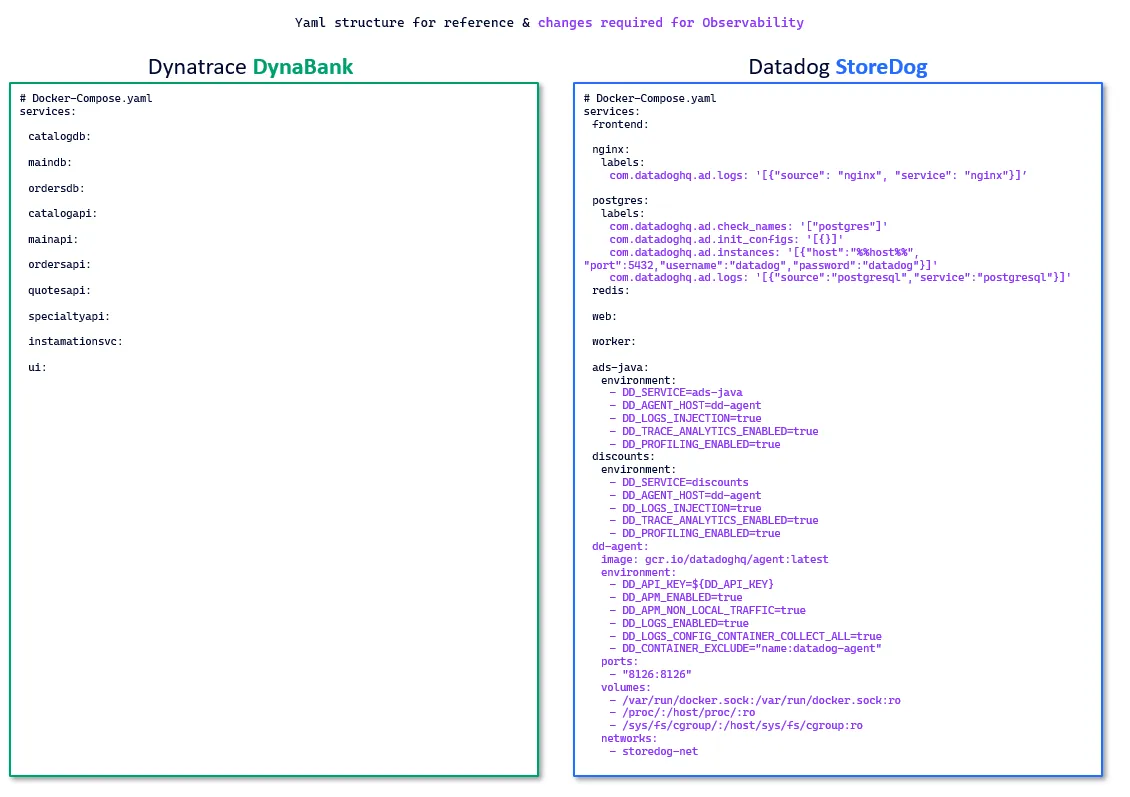
Given that both demo apps put their “best foot forward”- it’s clear which solution is working relentlessly to make deployment effortless and sustainable at scale.
Individual Services Comparison
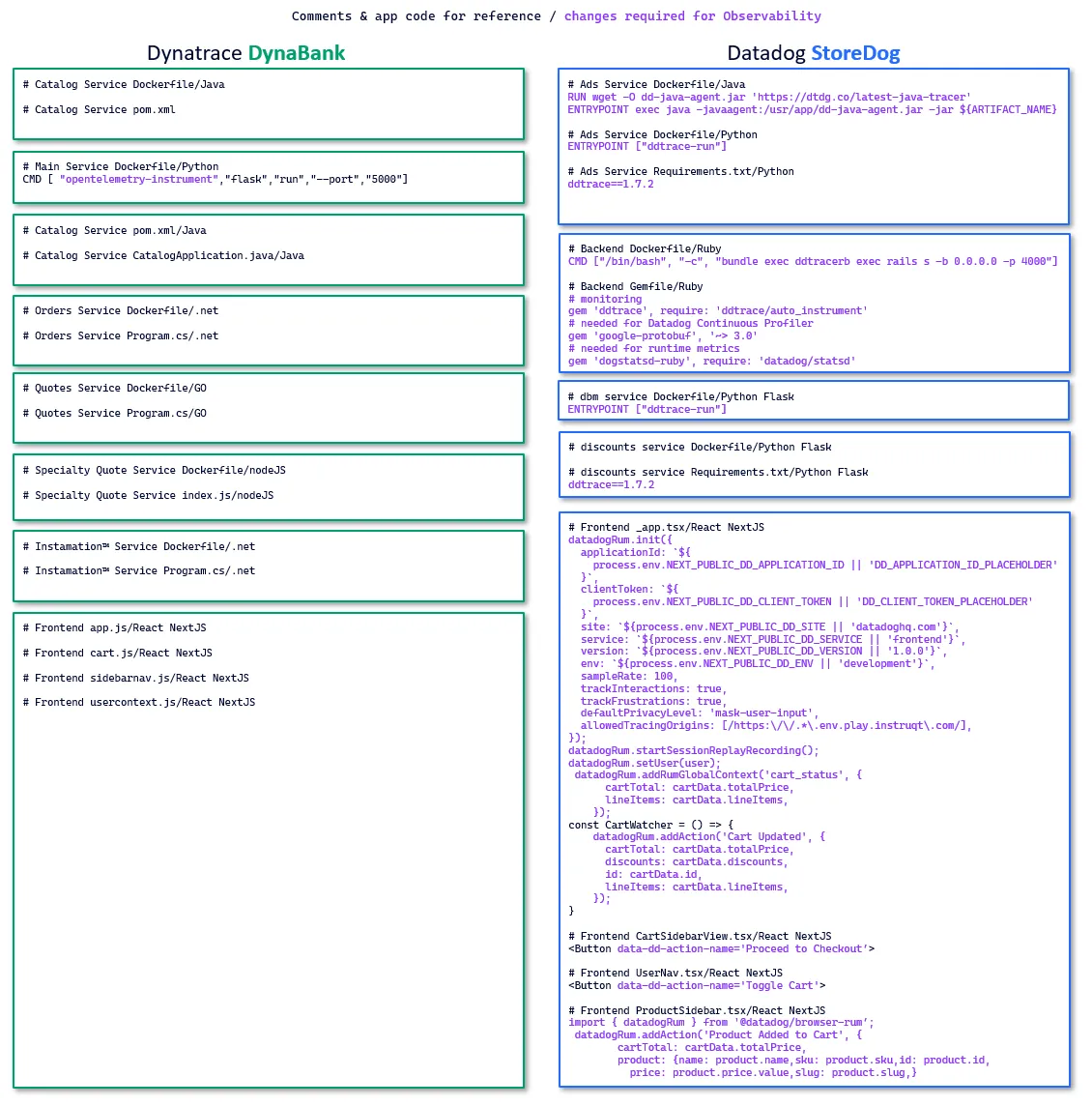
The application configuration required beyond the Docker Compose file make the difference even more apparent. It’s espiecally clear if you consider that Dynabank has 8 unique technologies vs 5 in Storedog.
Similar to previous, the screenshot below shows everywhere application configuration is required with the application code removed.
Conclusion
Working in technology can be extremely rewarding- but always requires a lot of teamwork and a lot of time to enable change. It’s crystal clear which Observability solution really understands that dynamic and has the expertise to a deliver the best solution with the least changes.
It’s important to be critical of a solution requiring many changes because:
- Initial implementation will take much longer. The math to calculate work hours is staggering: hours to understand change needed X dev/operations teams required to deploy change X # of services in application X # of applications that need Observability.
- More code changes means more time spent maintaining Observability instead of leveraging it. And if the math above wasn’t already overwhelming, it becomes lethal when multiplying again with updating the code every time an Observability change is needed.
Ultimately, which Observability solution is best for your organization should be determined during an evaluation. But make sure to evaluate as much as you can- across as much of your ecosystem as you can. Then take a few minutes to count how many hours deployment took & how many changes were made. It doesn’t help to deploy a solution that requires more time to maintain than the value it provides.